
Tick Surveillance, Water Year 2024-2025
Tick Collections from parks, 2024-2025 Season (November 2024 through May 2025)
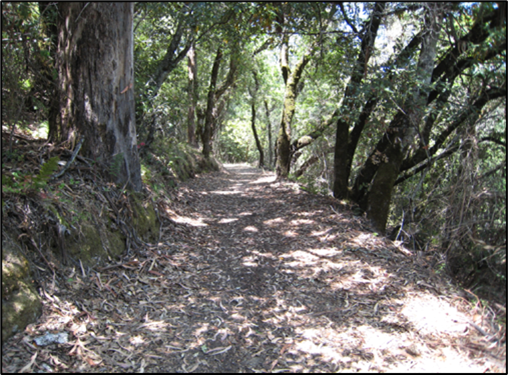
The District tests western black-legged ticks, Ixodes pacificus, ticks for three disease-causing pathogens: Borrelia burgdorferi sensu lato (Bbsl), which can cause Lyme disease, Borrelia miyamotoi (Bm), which can cause a relapsing fever, and Anaplama phagocytophilium (Ap), which can cause Anaplasmosis.
Adult ticks were collected during water-year 2024-2025 from November 2024 through March 2025. Nymphal ticks were collected from March 2025 through June 2025. Adult and nymphal ticks were tested separately because the infection prevalence can differ between life stages. Adult ticks were tested in pools of five ticks and nymphal ticks were tested in pools of two ticks. When a tick pool tests positive for a particular pathogen, it indicates that at least one tick within the pool was carrying that pathogen. The number of positive pools allows us to calculate a Minimum Infection Prevalence (MIP). This is the prevalence of the pathogen within the ticks, if only one tick is carrying the pathogen per pool. The actual infection prevalence might be slightly higher, but because all three pathogens are detected in a low percentage of ticks in San Mateo County. It will be very close to the MIP.
The pathogen Bbsl is of most concern to the District, as Lyme disease is reported at the highest rate of tick-borne diseases in California. County-wide, the MIP of Bbsl was 0.59% for adult ticks and 5.08% for nymphal ticks. The MIP is typically higher in nymphs than adults, as they can clear the bacteria while feeding on certain types of lizards before transitioning to the adult stage. Wunderlich County Park in Woodside had the highest MIP of 12.42% in nymphal ticks. District staff are following up this season with increased surveillance in this park and other parks with higher than typical MIP.
The results of the 2024-2025 water-year tick-borne disease surveillance program are summarized in two tables below, one for adult Ixodes pacificus and one for nymphal Ixodes pacificus. Parks with tick collection numbers too low to calculate an accurate MIP were omitted. County-wide numbers include residential areas that aren’t included in the list of parks.
Adult Ixodes pacificus pathogen test results
| Park or Area Name | Number of Ticks (Pools) | Bbsl+ Pools (MIP) | Bm+ Pools (MIP) | Ap+ Pools (MIP) |
|---|---|---|---|---|
| Crystal Springs Regional Trail | 113 (23) | 0 (0.00%) | 1 (0.86%) | 0 (0.00%) |
| Edgewood Park | 854 (184) | 5 (0.59%) | 9 (1.05%) | 1 (0.12%) |
| Laurelwood Park | 241 (49) | 2 (0.83%) | 1 (0.41%) | 0 (0.00%) |
| Los Trancos OSP | 315 (64) | 2 (0.63%) | 3 (0.95%) | 5 (1.59%) |
| Mills Canyon Wildlife Refuge | 198 (41) | 0 (0.00%) | 1 (0.51%) | 0 (0.00%) |
| Pulgas Ridge OSP | 255 (52) | 0 (0.00%) | 3 (1.18%) | 0 (0.00%) |
| Thornewood OSP | 324 (66) | 5 (1.54%) | 2 (0.62%) | 5 (1.54%) |
| Waterdog Lake Park | 458 (93) | 1 (0.22%) | 7 (1.53%) | 3 (0.66%) |
| Wavecrest Open Space | 53 (12) | 0 (0.00%) | 0 (0.00%) | 0 (0.00%) |
| Wunderlich County Park | 379 (82) | 4 (1.06%) | 10 (2.64%) | 3 (0.79%) |
| County-wide | 3,235 (681) | 19 (0.59%) | 38 (1.17%) | 17 (0.53%) |
Nymphal Ixodes pacificus pathogen test results
| Park or Area Name | Number of Ticks (Pools) | Bbsl+ Pools (MIP) | Bm+ Pools (MIP) | Ap+ Pools (MIP) |
|---|---|---|---|---|
| Eaton Park | 64 (33) | 0 (0.00%) | 1 (1.56%) | 0 (0.00%) |
| Edgewood Park | 235 (120) | 11 (4.68%) | 3 (1.28%) | 6 (2.55%) |
| La Honda OSP | 71 (36) | 4 (5.63%) | 2 (2.82%) | 1 (1.41%) |
| Los Trancos OSP | 74 (37) | 3 (4.05%) | 2 (2.70%) | 2 (2.70%) |
| San Pedro Valley Park | 77 (39) | 3 (3.90%) | 2 (2.60%) | 0 (0.00%) |
| Waterdog Lake Park | 112 (56) | 0 (0.00%) | 1 (0.89%) | 0 (0.00%) |
| Wunderlich County Park | 153 (78) | 19 (12.42%) | 6 (3.92%) | 0 (0.00%) |
| County-wide | 787 (400) | 44 (5.08%) | 23 (2.16%) | 10 (1.14%) |
Page last reviewed: January 15 2026